Core mechanism: LLMs do not crawl like search engines; they generate answers from their “memory” (model parameters). GEO optimizes content to be semantically rich, contextually relevant, and easy for LLMs to parse, so it gets quoted inside AI answers, not just listed on a results page.
- Visibility = reference rate: Track how often ChatGPT, Gemini, Claude cite you, not where you rank.
- Semantic richness & granularity: Treat each paragraph as a standalone answer. Use summaries, bullet points, “In summary” hooks.
- E-E-A-T matters: Demonstrate Expertise, Experience, Authoritativeness and Trustworthiness with bylines, case studies, data.
- Rapid iteration: Major model updates can change extraction patterns overnight. Review weekly.
- Platform-specific seeding: Reddit, YouTube, Quora dominate AI citations. Plant content where LLMs fish for answers.
-
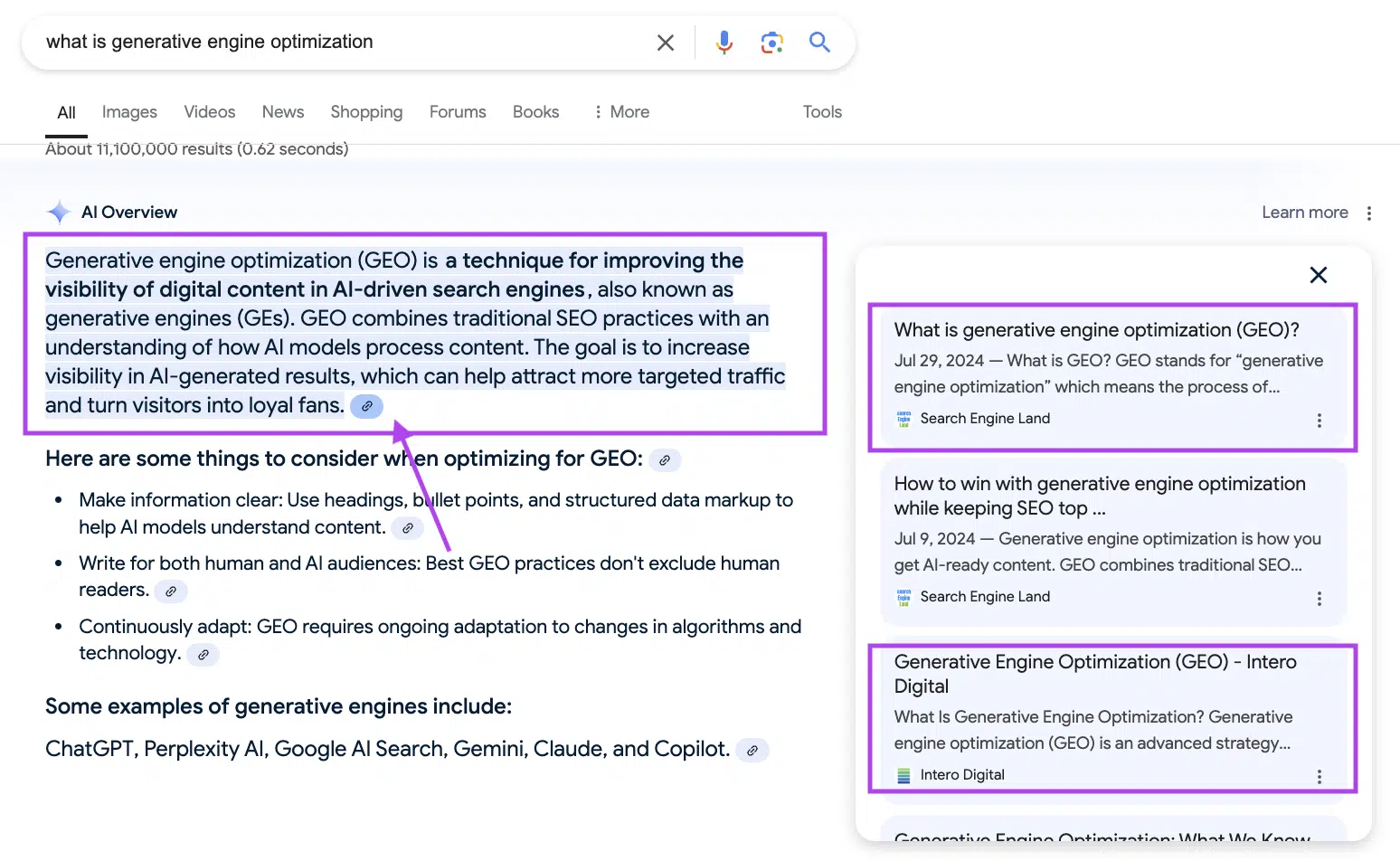
Search is shifting from links to language models
Traditional SEO optimized for keyword-driven, link-based rankings. GEO optimizes for being cited inside AI answers, your content becomes part of the model’s “response,” not just an entry on a results page.
-
Visibility = reference rate, not page rank
Instead of chasing high positions, GEO measures how often an LLM (ChatGPT/Gemini/Claude) references your content. In an AI-first world, will the model remember you?
-
Longer, conversational queries
Users ask 20–30 word prompts; sessions span multiple turns and context carries over. Your content must be structured and semantically clear so the AI can lift it out as a standalone answer.
-
E-E-A-T & trustworthiness matter
Models favor content demonstrating Expertise, Experience, Authoritativeness and Trustworthiness. Back up your points with author credentials, case studies or real-world data. (E.g: Showcase Dwarves Foundation’s expertise by highlighting author credentials)
-
Business-model shift: Influence over impressions
Unlike ad-driven search engines, subscription-based LLMs only surface third-party content when it truly adds value. GEO becomes a game of influencing the model’s memory, not just earning clicks.
-
Emerging GEO platforms & API-driven workflows
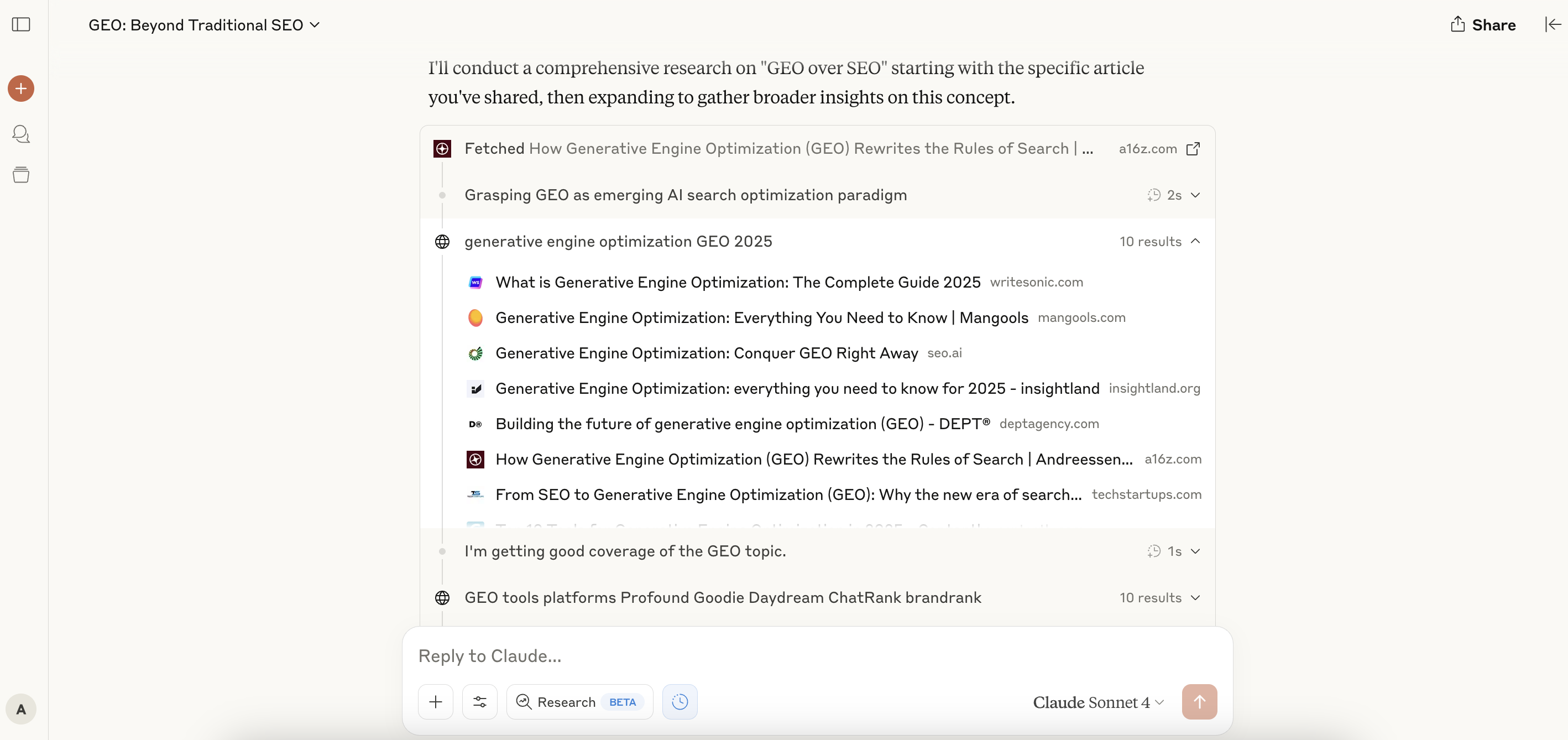
A new ecosystem (Profound, Goodie, Daydream, Semrush AI Toolkit) centralizes prompt testing, citation tracking, and dashboards integrate these via APIs to automate your deep-search experiments.
-
How GEO differs from traditional SEO:
SEO (Traditional) GEO (Generative) Ranking within a list of organic search results Having AI models incorporate your brand/content into their final answer Focus on keywords, backlinks, page rank, click-throughs Focus on language, content structure, semantic clarity, and reference rates Users click to visit websites Users get answers directly, may not visit sites Keyword-based optimization Language and context-based optimization
Reference rate
- % of representative AI queries that cite memo.d.foundation.
Structured content density
- Well-organized pages (headings, bullet lists, tables) packed with concise facts.
Outbound click volume
- When the AI answer links back, measuring those clicks shows real engagement beyond the model bubble.
- Restructure every page
- Write a clear “What you’ll learn” 2–3 sentence summary at the top.
- Break each topic into focused bullet points or Q&A blocks, treat each as its own answer.
- Label key sections with headings like Key takeaways, hot take or in summary.
- Use semantic markup
- Ensure every tutorial or FAQ section is flagged for AI:
- Wrap your steps in a “HowTo” block.
- Wrap Q&A pairs in an “FAQ” block.
- Build a deep-search pipeline
- Query simulator: Automate sending real-world prompts to LLM APIs (ChatGPT, Gemini, etc.) and record which pages or paragraphs are cited.
- Dashboard & alerts: Feed those results into a monitoring dashboard (e.g., Grafana). Set alerts if a page’s reference rate falls below 10%.
- Enforce CI/CD guardrails
- GEO linting checks: In your build pipeline, run automated checks (e.g., GitHub Actions) to ensure every new page includes summaries, takeaways, and FAQ sections before it goes live.
- LLM preview tests: On each content merge, trigger a quick API call with a standard prompt to confirm the new page surfaces correctly in the model response.
- Prompt engineering & fine-tuning
- Prompt templates: Provide a shared library of example prompts (e.g., “According to memo.d.foundation…”) for your LLM integration.
- Light fine-tuning: If you run an internal LLM, periodically retrain it on your memo content so it more reliably surfaces your branding and phrasing.
- Optional edge-Lvel geo-targeting
- Deploy a small edge function (e.g., Cloudflare Worker) that reads visitor locale and injects localized snippets (“In Vietnam, best practice is…”) on memo pages to boost regional relevance.
- AI-first discovery: As LLMs become the primary research interface, being in the answer wins direct mindshare, no click required.
- Competitive moat: Brands encoded into the AI layer gain lasting recall and preference. Raw impressions alone will not suffice.
- Inbound engine: High reference rates drive organic traffic, community growth, and lead generation without relying on Google rankings.
- Business-model shift: In subscription-driven LLM ecosystems, content surfaces only when it adds real value. GEO is about influencing model memory, not chasing clicks.
- Emerging GEO tooling: Platforms like Profou, Goodie, Daydream, and Semrush AI Toolkit centralize prompt testing, citation tracking, and dashboards. Integrate them via APIs to automate deep-search experiments.
Source insight from: https://a16z.com/geo-over-seo/