Service-based architecture is a kind of hybrid or middle-ground architecture between microservices and a monolith and is noted as a pragmatic architecture style due to its flexibility. Like a microservice architecture, it is essentially a distributed architecture, but it doesn't come with the cost of or complexity of other distributed architectures.
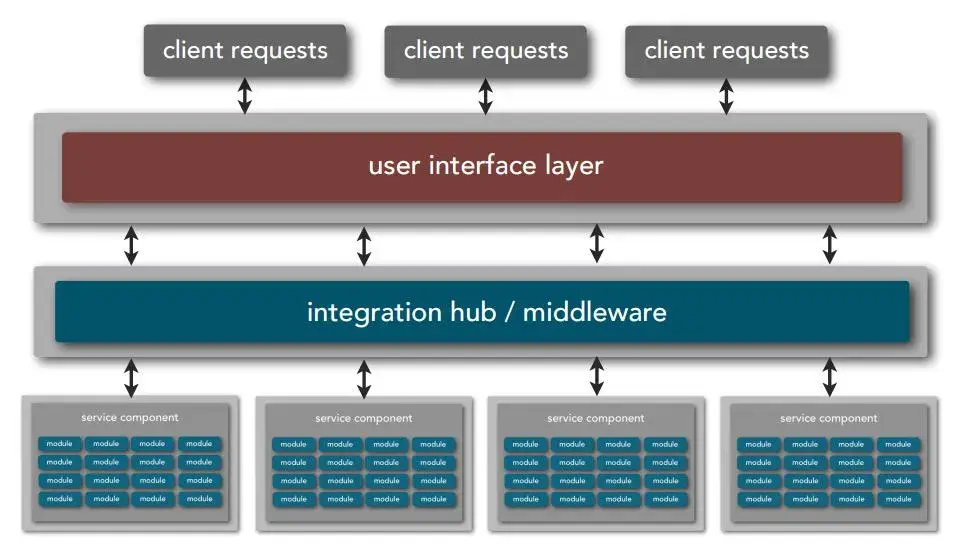
Microservices Architecture and Service-Oriented Architecture (SOA) are considered service-based architectures
Mark Richards, one of the authors who helped coin the term in the book Fundamentals of Software Architecture: An Engineering Approach, notes that service-based architectures lie as a superset of microservice and service-oriented architectures. The most notable patterns shared between the architectures, service contracts and a reliance on the BASE model with regard to database transactions.
It is quite arguably a one-size fits a lot of stuff architecture. It is very suitable for projects that contain business requirements a bit too complex to manage (or otherwise accrue technical debt) with a monolith. Likewise, it also doesn't require the level of loose coupling you would typically see in a strict microservice environment.
- Fundamentals of Software Architecture: An Engineering Approach—by Mark Richards, Neal Ford
- https://microservices.io/
- https://en.wikipedia.org/wiki/Microservices
- https://nofluffjuststuff.com/magazine/2015/10/the_challenges_of_service_based_architecture